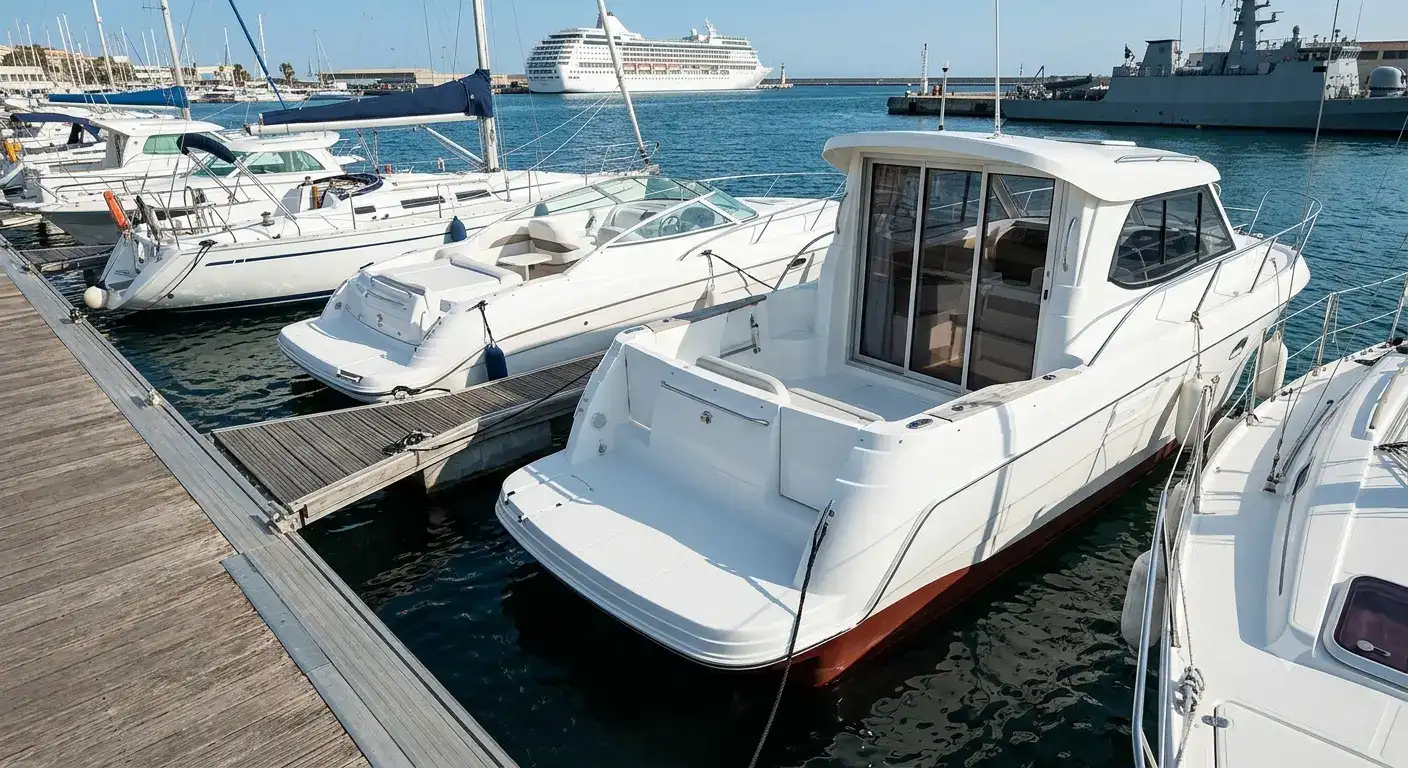
Why Are Most Boats White? The Real Science, History and Market Truth Explained
Most boats are white because white gel coat is the natural default in fiberglass manufacturing, white hull color reflects solar radiation to keep interiors cooler, and white boats carry better resale value alongside the strongest maritime safety visibility. Nautical tradition reinforces all of this. The answer goes deeper than most people expect and starts inside the production mold.
What Does White Actually Mean on a Boat?
When people ask why most boats are white, they are referring specifically to the hull topsides the visible surface above the waterline. That part of the hull tells one story. Below the waterline, the story is completely different.
Below the waterline, boats use antifouling paint in dark red, copper brown, or blue. Antifouling paint contains copper-based compounds that prevent marine organisms from attaching to the submerged hull surface. White pigmentation is chemically incompatible with these antifouling formulations and provides zero biological protection against the saltwater exposure that hulls deal with constantly.
So the next time you see a white boat in a marina, understand that the bottom half is almost certainly a dark color. The white boat conversation is really about the hull topsides and the choices that drive what happens there.
Gel Coat Is Not Paint and That Changes Everything
The white you see on most fiberglass boats is not marine paint applied after construction. It is gel coat a pigmented epoxy resin layer that workers apply into the production mold before any glass fibre layers go in. The gel coat becomes the structural outer skin of the finished hull during the fiberglass boat manufacturing process.
White pigmentation, primarily titanium dioxide, mixes directly into the gel coat epoxy from the start. This means white is built into the boat’s structure at the very first production step. The difference between gel coat and marine paint matters enormously for durability, UV resistance, repair complexity, and color change options down the line.
How Titanium Dioxide Protects White Hulls From UV Radiation
Here is where the chemistry becomes genuinely interesting. Titanium dioxide in white gel coat does not just reflect visible light. It actively scatters UV wavelengths, protecting the fiberglass structural matrix beneath from the UV degradation that progressively weakens the material over years of sun exposure.
Dark pigments absorb UV radiation rather than scattering it. This causes molecular breakdown of those pigment compounds and accelerates both visible color shift and structural stress in the underlying fiberglass. The UV resistance rating of white gel coat is fundamentally superior to darker hull colors for any vessel spending significant time in direct sunlight and saltwater conditions.
This is why white boats tend to look better for longer. The paint fading resistance of white gel coat is a chemistry result backed by titanium dioxide’s behavior, not a manufacturer claim designed to justify a single cheap color choice.
Why Fiberglass Manufacturing Makes White the Easiest Color to Produce
The practical answer to why most boats are white starts inside the production mold at the shipyard.
During fiberglass boat manufacturing, workers spray pigmented gel coat into the mold before adding glass fibre layers and epoxy resin. With white gel coat, any residual material left in the mold after a hull is removed is essentially invisible against the mold surface. The next white hull going in simply covers it without contamination.
With any other hull color, workers must clean the mold thoroughly after every production run to prevent color bleed into the next hull. This slows production and raises labor costs across every unit the shipyard builds.
White eliminates that problem entirely. Manufacturing cost reduction at scale is significant. This is why boat builders default to white gel coat even on high-end vessels where a different color might seem more distinctive. The economics of shipyard production consistently favor white.
Does White Hull Color Actually Keep a Boat Cooler Inside?
White hull color reflects solar radiation rather than absorbing it. On cruise ships and luxury yachts operating in tropical climate sailing conditions, this reduces the heat transferred into interior spaces in a measurable way. Air conditioning systems aboard white-hulled vessels work less hard, consume less energy, and maintain comfortable temperatures more consistently than equivalent systems on dark hull vessels in the same conditions.
The interior temperature differential between a white hull and a dark hull on a hot sunny day at open sea is significant enough to affect air conditioning energy savings across an entire voyage. For cruise ships carrying thousands of passengers through warm water routes, white hull thermal efficiency translates directly into lower operating costs and better guest comfort throughout the trip.
This practical thermal advantage is why cruise ships have remained white even as they have grown to enormous scales.
How White Hull Color Improves Maritime Safety and Sea Rescue Visibility
A white hull stands out clearly against the natural blue, green, and grey tones of the ocean and sky. This visual contrast makes vessels easier to detect during nighttime navigation, fog, and adverse weather when collision risk peaks.
The safety benefit extends further into emergency situations. Life buoys, flares, and emergency equipment come in orange and red specifically to contrast against the white hull background that rescue teams expect to encounter. When sea rescue operations are underway, a white hull creates the clearest visual field for locating crew and equipment quickly under pressure.
Maritime safety frameworks including COLREGS, the International Regulations for Preventing Collisions at Sea, require vessels to maintain visibility for collision avoidance. White hulls naturally complement mandated navigation lighting requirements because a light-colored hull surface reflects navigation light more effectively than a dark surface, improving overall vessel visibility at range.
Where Did the Tradition of White Boats Actually Start?
Understanding why most boats are white through generation after generation requires looking back at wooden boat building long before fiberglass existed.
Early wooden boat builders used white lead paint as their primary hull protection product. White lead was effective at preventing rot in timber planking and was widely available at ports where boats were built and maintained. Royal Navy vessels and major maritime powers reinforced white as a visual identification standard for naval fleets across centuries of use.
When fiberglass boat manufacturing standardized through the 1950s and 1960s and displaced wooden construction almost entirely, manufacturers defaulted to white gel coat because buyers already expected it and nautical tradition had established it over generations. That expectation reinforced itself through every decade since.
White boats exist because of chemistry, manufacturing economics, and a century of naval history that made white the color everyone associates with a clean and seaworthy vessel.
The Maintenance Paradox Every White Boat Owner Discovers
White hull color creates a maintenance paradox that most sellers will not mention upfront.
On the positive side, visual hull inspection on a white surface is highly effective. Osmosis blisters appear as raised bubbles with discolored edges. Cracks show as dark lines against the light background. Corrosion staining appears as brown or yellow marks that would blend into darker hull colors. These defects contrast sharply against white gel coat, making osmosis blister detection and crack identification faster without specialist equipment.
On the negative side, the same white surface shows:
- Salt spray staining from every voyage in saltwater
- Waterline marks from algae and mineral deposits after time in marina berths
- General oxidation and grime that darkens visibly between cleaning sessions
White hull maintenance requires regular marine cleaning products and detailing work to keep the hull looking the way buyers and owners expect. The color that makes damage easy to find also makes everyday dirt impossible to hide.
Why Container Ships and Military Vessels Choose Different Colors
Understanding the full picture means looking at who chooses hull colors other than white.
Container ships and cargo vessels have no interest in passenger comfort, thermal efficiency, or resale value. Their hull color comes down to whatever marine paint is cheapest, most available, or consistent with brand identity across a commercial fleet. Without pressure to impress passengers or maintain asset resale value, color becomes a pure cost and supply decision with no further constraint.
Military ships follow a completely different logic. Warships use bluish-grey paint specifically for naval camouflage. Grey minimizes visual contrast against the combined tones of sea and sky simultaneously, making silhouette identification and range estimation harder for adversaries. White hull color would make a warship immediately visible at great distances, directly defeating the maritime camouflage objective that grey achieves in operational conditions.
Both cases confirm the same rule. When thermal efficiency, passenger safety, and resale value stop mattering, the case for white hull color disappears with them.
Dark Hull Superyachts: A Trend With Real Operational Costs
The modern luxury superyacht market has pushed hard toward dark hull colors — black, midnight navy, and carbon-finish hulls. These vessels look visually distinctive and carry genuine exclusivity in how they present at anchor and underway.
But dark hull colors absorb significantly more solar radiation than white. Interior temperatures rise faster, air conditioning systems work harder per voyage, and energy consumption increases consistently in warm water cruising destinations. Superyacht owners with dark hull vessels accept higher running costs as the price of standing apart from the white hull majority.
For the average recreational boat buyer, this trade-off rarely makes practical sense. The thermal management challenge, higher cooling costs, and narrower resale pool that a dark hull creates are real financial consequences without the unlimited operating budget that superyacht ownership assumes.
White Boats Hold Their Value Better in the Marine Market
White hull color directly affects what a boat is worth when you decide to sell it.
White boats sell faster and command measurable price premiums in the used boat market. Charter companies and marina operators specifically prefer white hulls because white appeals to the broadest possible buyer demographic. An unusual hull color immediately narrows the pool of willing buyers and reduces final sale price through friction that white hull vessels simply do not face.
Resale value retention for white-hulled boats consistently outperforms equivalently equipped vessels with non-standard hull colors across marine markets in 2026. Manufacturers know this, which reinforces why fiberglass boat manufacturing defaults to white gel coat even when individual buyers express interest in alternatives.
If you are buying a boat and considering a non-white hull, treat the hull color as a financial decision alongside a personal one.
Final Thoughts
Why are most boats white comes down to five forces working together rather than one single reason. White is the fiberglass manufacturing default, the most UV-protective pigment chemistry available, the strongest thermal performer in warm climate sailing, the highest-visibility option for maritime safety, and the most defensible resale value choice in the marine market. Before choosing a different hull color, weigh each of these factors honestly against your actual use case and long-term ownership plan.
FAQs
Why are sailboats almost always white? Sailboats are white because fiberglass manufacturing defaults to white gel coat, sailboats spend extended hours exposed to direct ocean sunlight where white hull heat reflection provides real crew comfort, and nautical tradition alongside strong resale value preferences in the sailing community reinforce the pattern across every generation of buyers.
Can you paint a fiberglass boat a different color? Yes. Applying compatible marine paint over existing white gel coat after thorough surface preparation is the most practical approach. Changing the actual gel coat color requires grinding back to bare fiberglass and reapplying new pigmented gel coat, which is significantly more labor-intensive and expensive but delivers a more durable long-term result.
Why are military ships grey and not white? Military ships use bluish-grey naval camouflage because grey minimizes visual contrast against both ocean and sky simultaneously, making silhouette identification and range calculation harder for adversaries. White would make a warship highly visible at sea distances, which directly defeats maritime camouflage objectives.
Do white boats fade faster than darker colored boats? No. White gel coat with titanium dioxide as its base pigment reflects UV radiation rather than absorbing it, making white one of the most UV-stable hull color choices for marine use. Dark pigments absorb UV and experience faster molecular breakdown and visible fading under the same sun and saltwater exposure conditions.
Why is the paint below the waterline never white? Below the waterline, hulls use antifouling paint containing copper-based compounds to prevent marine organism growth. White pigmentation is chemically incompatible with effective antifouling formulations and provides no biological protection. Antifouling paint runs dark red, copper brown, or blue for this fundamental technical reason.
Does boat color affect marine insurance premiums? White hull color can positively influence marine insurance assessments because better visibility at sea directly reduces collision risk, which is a primary underwriting factor. Some marine insurers consider hull visibility alongside navigation equipment, operator experience, and mooring conditions when pricing hull coverage policies.
Final Thoughts
Why are most boats white comes down to five forces working together rather than one single reason. White is the fiberglass manufacturing default, the most UV-protective pigment chemistry available, the strongest thermal performer in warm climate sailing, the highest-visibility option for maritime safety, and the most defensible resale value choice in the marine market. Before choosing a different hull color, weigh each of these factors honestly against your actual use case and long-term ownership plan.
Why Are Most Boats White? The Real Science, History and Market Truth Explained
Most boats are white because white gel coat is the natural default in fiberglass manufacturing, white hull color reflects solar radiation to keep interiors cooler, and white boats carry better resale value alongside the strongest maritime safety visibility. Nautical tradition reinforces all of this. The answer goes deeper than most people expect and starts inside the production mold.
What Does White Actually Mean on a Boat?
When people ask why most boats are white, they are referring specifically to the hull topsides the visible surface above the waterline. That part of the hull tells one story. Below the waterline, the story is completely different.
Below the waterline, boats use antifouling paint in dark red, copper brown, or blue. Antifouling paint contains copper-based compounds that prevent marine organisms from attaching to the submerged hull surface. White pigmentation is chemically incompatible with these antifouling formulations and provides zero biological protection against the saltwater exposure that hulls deal with constantly.
So the next time you see a white boat in a marina, understand that the bottom half is almost certainly a dark color. The white boat conversation is really about the hull topsides and the choices that drive what happens there.
Gel Coat Is Not Paint and That Changes Everything
The white you see on most fiberglass boats is not marine paint applied after construction. It is gel coat a pigmented epoxy resin layer that workers apply into the production mold before any glass fibre layers go in. The gel coat becomes the structural outer skin of the finished hull during the fiberglass boat manufacturing process.
White pigmentation, primarily titanium dioxide, mixes directly into the gel coat epoxy from the start. This means white is built into the boat’s structure at the very first production step. The difference between gel coat and marine paint matters enormously for durability, UV resistance, repair complexity, and color change options down the line.
How Titanium Dioxide Protects White Hulls From UV Radiation
Here is where the chemistry becomes genuinely interesting. Titanium dioxide in white gel coat does not just reflect visible light. It actively scatters UV wavelengths, protecting the fiberglass structural matrix beneath from the UV degradation that progressively weakens the material over years of sun exposure.
Dark pigments absorb UV radiation rather than scattering it. This causes molecular breakdown of those pigment compounds and accelerates both visible color shift and structural stress in the underlying fiberglass. The UV resistance rating of white gel coat is fundamentally superior to darker hull colors for any vessel spending significant time in direct sunlight and saltwater conditions.
This is why white boats tend to look better for longer. The paint fading resistance of white gel coat is a chemistry result backed by titanium dioxide’s behavior, not a manufacturer claim designed to justify a single cheap color choice.
Why Fiberglass Manufacturing Makes White the Easiest Color to Produce
The practical answer to why most boats are white starts inside the production mold at the shipyard.
During fiberglass boat manufacturing, workers spray pigmented gel coat into the mold before adding glass fibre layers and epoxy resin. With white gel coat, any residual material left in the mold after a hull is removed is essentially invisible against the mold surface. The next white hull going in simply covers it without contamination.
With any other hull color, workers must clean the mold thoroughly after every production run to prevent color bleed into the next hull. This slows production and raises labor costs across every unit the shipyard builds.
White eliminates that problem entirely. Manufacturing cost reduction at scale is significant. This is why boat builders default to white gel coat even on high-end vessels where a different color might seem more distinctive. The economics of shipyard production consistently favor white.
Does White Hull Color Actually Keep a Boat Cooler Inside?
White hull color reflects solar radiation rather than absorbing it. On cruise ships and luxury yachts operating in tropical climate sailing conditions, this reduces the heat transferred into interior spaces in a measurable way. Air conditioning systems aboard white-hulled vessels work less hard, consume less energy, and maintain comfortable temperatures more consistently than equivalent systems on dark hull vessels in the same conditions.
The interior temperature differential between a white hull and a dark hull on a hot sunny day at open sea is significant enough to affect air conditioning energy savings across an entire voyage. For cruise ships carrying thousands of passengers through warm water routes, white hull thermal efficiency translates directly into lower operating costs and better guest comfort throughout the trip.
This practical thermal advantage is why cruise ships have remained white even as they have grown to enormous scales.
How White Hull Color Improves Maritime Safety and Sea Rescue Visibility
A white hull stands out clearly against the natural blue, green, and grey tones of the ocean and sky. This visual contrast makes vessels easier to detect during nighttime navigation, fog, and adverse weather when collision risk peaks.
The safety benefit extends further into emergency situations. Life buoys, flares, and emergency equipment come in orange and red specifically to contrast against the white hull background that rescue teams expect to encounter. When sea rescue operations are underway, a white hull creates the clearest visual field for locating crew and equipment quickly under pressure.
Maritime safety frameworks including COLREGS, the International Regulations for Preventing Collisions at Sea, require vessels to maintain visibility for collision avoidance. White hulls naturally complement mandated navigation lighting requirements because a light-colored hull surface reflects navigation light more effectively than a dark surface, improving overall vessel visibility at range.
Where Did the Tradition of White Boats Actually Start?
Understanding why most boats are white through generation after generation requires looking back at wooden boat building long before fiberglass existed.
Early wooden boat builders used white lead paint as their primary hull protection product. White lead was effective at preventing rot in timber planking and was widely available at ports where boats were built and maintained. Royal Navy vessels and major maritime powers reinforced white as a visual identification standard for naval fleets across centuries of use.
When fiberglass boat manufacturing standardized through the 1950s and 1960s and displaced wooden construction almost entirely, manufacturers defaulted to white gel coat because buyers already expected it and nautical tradition had established it over generations. That expectation reinforced itself through every decade since.
White boats exist because of chemistry, manufacturing economics, and a century of naval history that made white the color everyone associates with a clean and seaworthy vessel.
The Maintenance Paradox Every White Boat Owner Discovers
White hull color creates a maintenance paradox that most sellers will not mention upfront.
On the positive side, visual hull inspection on a white surface is highly effective. Osmosis blisters appear as raised bubbles with discolored edges. Cracks show as dark lines against the light background. Corrosion staining appears as brown or yellow marks that would blend into darker hull colors. These defects contrast sharply against white gel coat, making osmosis blister detection and crack identification faster without specialist equipment.
On the negative side, the same white surface shows:
- Salt spray staining from every voyage in saltwater
- Waterline marks from algae and mineral deposits after time in marina berths
- General oxidation and grime that darkens visibly between cleaning sessions
White hull maintenance requires regular marine cleaning products and detailing work to keep the hull looking the way buyers and owners expect. The color that makes damage easy to find also makes everyday dirt impossible to hide.
Why Container Ships and Military Vessels Choose Different Colors
Understanding the full picture means looking at who chooses hull colors other than white.
Container ships and cargo vessels have no interest in passenger comfort, thermal efficiency, or resale value. Their hull color comes down to whatever marine paint is cheapest, most available, or consistent with brand identity across a commercial fleet. Without pressure to impress passengers or maintain asset resale value, color becomes a pure cost and supply decision with no further constraint.
Military ships follow a completely different logic. Warships use bluish-grey paint specifically for naval camouflage. Grey minimizes visual contrast against the combined tones of sea and sky simultaneously, making silhouette identification and range estimation harder for adversaries. White hull color would make a warship immediately visible at great distances, directly defeating the maritime camouflage objective that grey achieves in operational conditions.
Both cases confirm the same rule. When thermal efficiency, passenger safety, and resale value stop mattering, the case for white hull color disappears with them.
Dark Hull Superyachts: A Trend With Real Operational Costs
The modern luxury superyacht market has pushed hard toward dark hull colors — black, midnight navy, and carbon-finish hulls. These vessels look visually distinctive and carry genuine exclusivity in how they present at anchor and underway.
But dark hull colors absorb significantly more solar radiation than white. Interior temperatures rise faster, air conditioning systems work harder per voyage, and energy consumption increases consistently in warm water cruising destinations. Superyacht owners with dark hull vessels accept higher running costs as the price of standing apart from the white hull majority.
For the average recreational boat buyer, this trade-off rarely makes practical sense. The thermal management challenge, higher cooling costs, and narrower resale pool that a dark hull creates are real financial consequences without the unlimited operating budget that superyacht ownership assumes.
White Boats Hold Their Value Better in the Marine Market
White hull color directly affects what a boat is worth when you decide to sell it.
White boats sell faster and command measurable price premiums in the used boat market. Charter companies and marina operators specifically prefer white hulls because white appeals to the broadest possible buyer demographic. An unusual hull color immediately narrows the pool of willing buyers and reduces final sale price through friction that white hull vessels simply do not face.
Resale value retention for white-hulled boats consistently outperforms equivalently equipped vessels with non-standard hull colors across marine markets in 2026. Manufacturers know this, which reinforces why fiberglass boat manufacturing defaults to white gel coat even when individual buyers express interest in alternatives.
If you are buying a boat and considering a non-white hull, treat the hull color as a financial decision alongside a personal one.
Final Thoughts
Why are most boats white comes down to five forces working together rather than one single reason. White is the fiberglass manufacturing default, the most UV-protective pigment chemistry available, the strongest thermal performer in warm climate sailing, the highest-visibility option for maritime safety, and the most defensible resale value choice in the marine market. Before choosing a different hull color, weigh each of these factors honestly against your actual use case and long-term ownership plan.
FAQs
Why are sailboats almost always white?
Sailboats are white because fiberglass manufacturing defaults to white gel coat, sailboats spend extended hours exposed to direct ocean sunlight where white hull heat reflection provides real crew comfort, and nautical tradition alongside strong resale value preferences in the sailing community reinforce the pattern across every generation of buyers.
Can you paint a fiberglass boat a different color?
Yes. Applying compatible marine paint over existing white gel coat after thorough surface preparation is the most practical approach. Changing the actual gel coat color requires grinding back to bare fiberglass and reapplying new pigmented gel coat, which is significantly more labor-intensive and expensive but delivers a more durable long-term result.
Why are military ships grey and not white?
Military ships use bluish-grey naval camouflage because grey minimizes visual contrast against both ocean and sky simultaneously, making silhouette identification and range calculation harder for adversaries. White would make a warship highly visible at sea distances, which directly defeats maritime camouflage objectives.
Do white boats fade faster than darker colored boats?
No. White gel coat with titanium dioxide as its base pigment reflects UV radiation rather than absorbing it, making white one of the most UV-stable hull color choices for marine use. Dark pigments absorb UV and experience faster molecular breakdown and visible fading under the same sun and saltwater exposure conditions.
Why is the paint below the waterline never white?
Below the waterline, hulls use antifouling paint containing copper-based compounds to prevent marine organism growth. White pigmentation is chemically incompatible with effective antifouling formulations and provides no biological protection. Antifouling paint runs dark red, copper brown, or blue for this fundamental technical reason.
Does boat color affect marine insurance premiums?
White hull color can positively influence marine insurance assessments because better visibility at sea directly reduces collision risk, which is a primary underwriting factor. Some marine insurers consider hull visibility alongside navigation equipment, operator experience, and mooring conditions when pricing hull coverage policies.