Where Technology Meets Cooking: The Complete Guide to Smart Kitchen Innovation
Technology has completely changed the way people cook at home. From smart ovens that detect what food is inside to AI powered fridges that suggest recipes the modern kitchen is now a full scale tech hub. Whether you are a beginner who burns toast or a confident home cook these tools can save you time reduce food waste and make every meal more enjoyable.
What Does Where Technology Meets Cooking Actually Mean?
It means using digital tools, connected appliances, and artificial intelligence to make cooking smarter. Technology in the kitchen is no longer just about a microwave or a timer. Today, it covers voice-activated assistants, robotic cooking devices, precision temperature control and apps that build your grocery list automatically.
The shift happened fast. A few years ago a smart kitchen sounded futuristic. Now, more than 75 percent of households cook at home more than ever before, and the demand for smarter, faster, and more personalized cooking tools has exploded.
A Quick Timeline: How Kitchen Technology Evolved
Understanding where we are today starts with knowing how we got here.
| Year | Kitchen Technology Milestone |
|---|---|
| 1947 | Microwave oven invented |
| 1970s | Food processors become household tools |
| 1990s | Digital recipe databases appear online |
| 2007 | Smartphones begin changing how people access recipes |
| 2010s | Wi-Fi-connected ovens and smart fridges enter homes |
| 2020 | Post-pandemic cooking surge drives demand for smarter appliances |
| 2023 | AI integration in everyday kitchen appliances accelerates |
| 2025 | Robotic countertop cookers and AI vision fridges go mainstream |
| 2030 | Projected: over 60 percent of urban households use AI-integrated kitchen appliances |
This timeline shows that kitchen technology has not been a sudden jump. It has been a steady progression, and right now, we are in the most exciting phase of that journey.
Smart Kitchen Appliances: The Backbone of Modern Cooking
Smart kitchen appliances are internet-connected devices that use sensors, cameras, and software to automate or assist with cooking tasks. They can be controlled remotely, learn your habits over time, and communicate with other devices in your home.
Smart Ovens
A modern smart oven does far more than bake. Built-in sensors detect the type of food inside and adjust the cooking temperature automatically. Many models include a camera so you can monitor your food from a smartphone app while sitting in another room. Some go further by changing humidity levels mid-bake to ensure bread rises perfectly or cookies stay soft.
The biggest common mistake people make with smart ovens is ignoring the app that comes with them. The app is where most of the intelligence lives, including guided recipes, remote control, and cooking history. Setting it up properly on day one saves a lot of frustration later.
Smart Refrigerators
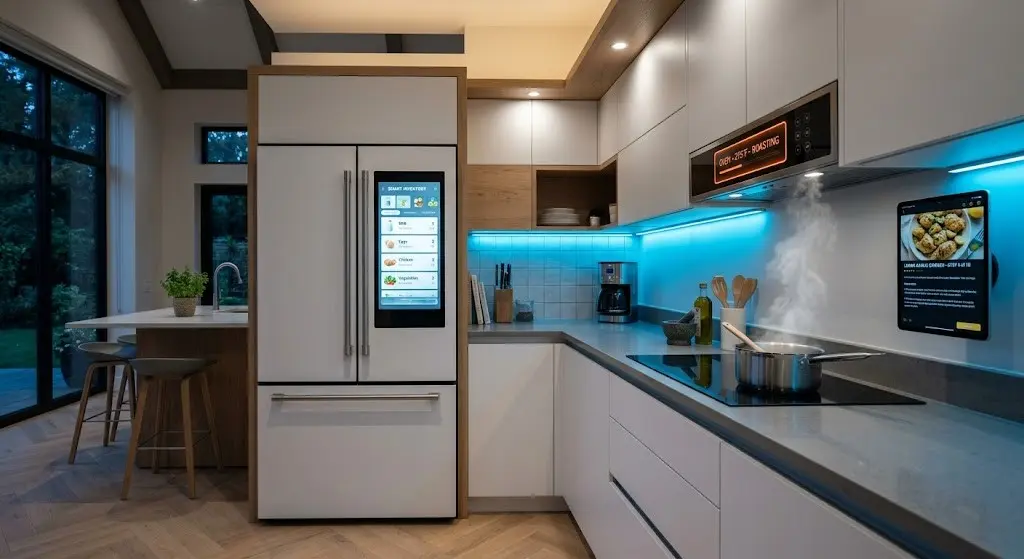
The smart refrigerator may be the single most useful piece of kitchen technology available right now. Internal cameras recognize individual food items, track expiry dates, and alert you when something is about to go bad. Some models can suggest recipes using the exact ingredients you already have inside.
One underrated feature is the inventory tracking system. It sends you a shopping list notification when staples run low, so you never open the fridge to discover you are out of eggs again. This directly reduces food waste, which is one of the biggest problems in modern households.
Smart Hobs and Induction Cooktops
Smart hobs use electromagnetic energy to heat cookware directly rather than the surface beneath it. This makes them faster and far more energy efficient than traditional gas or electric cooktops. Advanced models detect the size of your pan and automatically adjust the heating zone to match it.
The precision these hobs offer is genuinely useful for anyone who has overcooked a sauce or scorched a delicate reduction. Some models also detect if a pot has been left on too long and shut off automatically, which is a practical safety feature for busy households.
Smart Ventilation Systems
A smart ventilation system uses sensors to measure heat steam and humidity in real time. It then adjusts the fan speed based on what is happening on the cooktop below. This uses significantly less energy than a traditional hood that runs at full speed the entire time you cook.
Voice-Activated Cooking: Hands-Free and Actually Helpful
Anyone who has tried to scroll through a recipe with floury hands knows the problem. Voice-activated assistants like Amazon Alexa and Google Assistant solve this completely.
With a simple voice command, you can set multiple timers at once, convert measurement units, adjust your oven temperature, look up a substitution for an ingredient, or add items to your grocery list. These assistants also connect to other smart devices, so saying “start preheating the oven” from across the kitchen is enough.
A practical tip: set up your voice assistant with your most-used recipe apps before you need it mid cook. Testing it on a low-stakes meal first saves confusion when you are handling raw chicken and need both hands free.
Connected Cookware and Kitchen Gadgets
The intelligence in modern kitchens does not stop with large appliances. Connected cookware and smaller gadgets now bring precision and feedback directly to the cooking surface itself.
Smart scales give precise measurements in real time and sync with recipe apps to guide you through ingredient amounts step by step. They eliminate the guesswork that beginners often struggle with when baking, where a few extra grams of flour can ruin a loaf.
Smart frying pans with built-in temperature sensors alert you when the pan has reached the right heat for searing meat, so you stop burning food or undercooking it. Digital thermometers now give accurate readings in under five seconds and connect to apps that tell you exactly when a chicken breast has reached a safe internal temperature.
Smart pressure cookers and multicookers are another category worth noting. Some can download new recipes directly and then execute the entire cooking process without you adjusting anything manually. You add the ingredients, select the recipe, and the device handles timing, temperature, and even stirring in some models.
Precision Cooking Technology: Where Science Meets the Plate
Precision cooking is one of the clearest examples of how technology improves actual food quality, not just convenience.
Sous Vide Cooking
Sous vide is a cooking technique where food is vacuum-sealed and submerged in water held at a precise, controlled temperature. The result is food cooked evenly from edge to edge, with no overdone exterior and no raw center.
The technology that once lived only in restaurant kitchens is now affordable and accessible for home cooks. A sous vide device clips onto any pot, connects to a smartphone app, and maintains temperature within a fraction of a degree. You set it up, walk away, and return to perfectly cooked salmon or steak every time.
The most common beginner mistake with sous vide is skipping the final sear. The technique gives you perfect internal doneness, but a quick 60-second sear in a hot pan at the end adds the crust and flavor that completes the dish.
Augmented Reality Recipe Apps
Augmented reality in cooking is still developing but it already adds genuine value for learners. AR recipe apps overlay visual instructions onto your actual kitchen environment through your phone or tablet camera. You can point the camera at an ingredient and see exactly how much to add, or follow animated cutting guides overlaid on a chopping board.
For anyone who finds written recipes confusing or video tutorials hard to pause at the right moment, AR guided cooking removes the friction entirely.
Robotic Kitchens and Robot Chefs: What Is Actually Possible Now
This is where the topic gets both exciting and realistic. Robotic kitchen technology exists, but it is important to separate what is available for home use from what remains in commercial settings.
What Is a Robotic Kitchen?
A robotic kitchen is a cooking environment that uses automated mechanical systems, AI software, and sensor technology to prepare food with minimal or no human intervention. Robotic arms can chop vegetables, pick them up, and transfer them to a pan. Automated cooking systems can stir, flip, and monitor food without anyone standing at the stove.
Right now, the most advanced robotic kitchen systems are used commercially, in large-scale food production facilities and high-end restaurant labs. Full residential robotic kitchens with humanoid robots cooking entire meals remain expensive and largely out of reach for most people.
What Home Cooks Can Actually Buy
The more realistic version for homes today is the countertop automated cooking device. These compact machines combine chopping, blending, steaming, sauteing, and cooking in one unit. You select a recipe, add ingredients, and the device manages the entire process.
Some newer models use computer vision and machine learning to monitor food as it cooks and make heat adjustments automatically. This is a genuine step toward true kitchen automation at a consumer price point.
The gap between commercial robotics and home cooking tech is narrowing. As more consumers adopt these devices and manufacturing costs fall, modular and affordable robotic kitchen tools will become standard in the same way air fryers did in the early 2020s.
Current State of Kitchen Robotics: A Clear Overview
| Type | Available Now | Key Limitation | Near-Future Outlook |
|---|---|---|---|
| AI-powered robotic arms | Commercial kitchens only | High cost, needs large space | May adapt into modular home versions |
| Automated cooking systems | Mostly commercial | Complex setup required | Features will trickle into consumer products |
| Countertop cooking robots | Available for homes | Still relatively expensive | Growing adoption as prices drop |
| Smart multicookers | Widely available | Limited to specific recipe types | Expanding recipe libraries via app updates |
The Role of IoT and Smart Home Integration
One of the biggest advantages of modern kitchen technology is that individual devices do not have to work in isolation. The Internet of Things (IoT) connects all your appliances so they can share data and coordinate with each other.
For example, when your smart hob turns on, the smart ventilation system can automatically increase fan speed to handle the heat and steam. When your smart oven finishes, a notification appears on your phone and your smart speaker announces that dinner is ready. Your fridge can communicate with your grocery app to order what you need before you realize you need it.
This level of smart home integration is already possible using platforms like SmartThings, and it works best when all your appliances are purchased from compatible ecosystems. The practical advice here is to check compatibility before buying. Mixing brands that use different platforms creates frustrating situations where devices cannot talk to each other.
How Smart Kitchen Technology Reduces Food Waste
Food waste contributes to roughly eight percent of global greenhouse gas emissions each year. Smart kitchen technology directly addresses this problem in several practical ways.
AI-powered fridges track expiry dates and surface recipes that use ingredients before they go bad. Smart ventilation and cooking systems optimize energy use during meal preparation. Energy-efficient appliances use sensors to apply only the heat or water required for the specific task at hand, rather than running at full capacity constantly.
Some advanced models even include AI-driven waste management features that log what you throw away and suggest shopping adjustments to avoid buying food you consistently waste. For anyone serious about reducing their household’s environmental footprint, this is one of the most tangible benefits of upgrading to connected kitchen devices.
Technology for Learning to Cook: Apps, Online Classes, and AR
Technology has not just improved the physical act of cooking. It has also made learning how to cook dramatically more accessible.
Online cooking classes allow anyone with an internet connection to learn at their own pace from professional chefs. Unlike a one-time class, these platforms update their content regularly, so learners always have access to new techniques and seasonal recipes.
Interactive recipe apps go beyond listing ingredients and steps. The best ones include embedded timers, video demonstrations, and grocery list integration. Some allow you to input the ingredients you already have and generate recipe ideas that use exactly what is in your kitchen, which reduces both waste and the cost of unnecessary grocery trips.
Virtual cooking parties have become a genuine way for people to cook together while apart. Friends or family join a video call, cook the same recipe simultaneously, and share the experience in real time. It turns cooking from a solitary task into a social one without anyone needing to leave their home.
Common Problems with Smart Kitchen Technology (And How to Solve Them)
Smart kitchen gadgets come with real challenges. Knowing about them in advance helps you avoid wasting money or getting frustrated.
Problem 1: Devices from different brands do not work together. This is the most common complaint. The solution is to choose appliances within the same ecosystem, such as Samsung SmartThings or a Google Home-compatible range, before you buy.
Problem 2: The app is confusing or unreliable. Most smart appliances are only as good as their companion app. Before purchasing, read recent user reviews specifically about the app experience. A great oven with a poorly designed app is a daily source of frustration.
Problem 3: High upfront cost makes smart appliances feel unjustifiable. Start small. A smart thermometer or smart scale costs under $50 and immediately improves cooking accuracy. You do not need a $3,000 fridge to start benefiting from kitchen technology.
Problem 4: Privacy concerns about data collection. Smart appliances collect behavioral data, including when you cook, what you buy, and how often you open the fridge. To limit this, review the privacy settings in each app, disable unnecessary data sharing, and choose brands with clear, transparent data policies.
Problem 5: Older homes lack the electrical infrastructure for smart kitchens. Many older buildings, particularly those built before 1990, do not have the wiring capacity for multiple high-power connected appliances. Consult an electrician before installing a full smart kitchen setup. A phased upgrade over time is often more practical than changing everything at once.
Smart Kitchen Technology by Budget: Where to Start
You do not need to spend a fortune to bring useful technology into your kitchen. Here is a practical breakdown by budget range.
Under $100 Start with a digital instant-read thermometer, a smart kitchen scale that syncs to a recipe app, or a basic smart plug that lets you control any existing appliance with your phone or voice assistant.
$100 to $300 At this range, a sous vide precision cooker is one of the best investments for improving food quality. A connected air fryer with app control and guided recipes also falls in this bracket.
$300 to $700 This opens up smart countertop ovens with sensor cooking, smart multicookers with downloadable recipes, and connected induction cooktops with precise temperature zones.
$700 and above At this level, you are looking at full smart oven ranges, premium smart ventilation systems, and high-end countertop cooking robots that automate the majority of meal preparation.
The practical approach is to identify the biggest frustration in your current cooking routine and solve that specific problem first. Every other upgrade follows naturally from there.
What the Data Says: The Smart Kitchen Market in Numbers
The numbers behind smart kitchen technology tell a compelling story about where this industry is heading.
The global smart kitchen market was valued at approximately $5.3 billion in 2023. It is projected to exceed $14 billion by 2030. Asia is currently the fastest-growing region for smart kitchen adoption, expanding at a rate of around 20 percent annually. In the United States, nearly 30 percent of households already own a connected air fryer, which shows how fast a single category can reach mainstream adoption.
By 2035, projections suggest that more than 60 percent of urban households in developed economies will have at least one AI-integrated kitchen appliance. The direction is clear. Smart kitchens are not a premium luxury for the few. They are becoming the standard for how most people will cook within the next decade.
Does Technology Take the Joy Out of Cooking?
This is a question worth taking seriously, because cooking means something to people beyond just producing food.
The honest answer is that technology, used well, does not replace the joy of cooking. It removes the parts that are not enjoyable, including the stress of timing three dishes at once, the frustration of burning something for the third time, or the anxiety of not knowing if meat is safe to eat.
When a smart oven handles temperature adjustment automatically, it does not prevent you from tasting, adjusting seasoning, or plating food beautifully. It just removes the technical failure points so your creative energy goes into the parts of cooking that actually require a human touch.
The best way to think about it is that cooking technology functions like a reliable sous chef. It handles the precise, repetitive, or time-sensitive tasks so you can focus on the parts you enjoy most.
Frequently Asked Questions
What is a smart kitchen? A smart kitchen is a cooking environment equipped with internet-connected appliances, voice assistants, and AI-powered tools that automate or assist with food preparation, inventory management, and energy use.
Are smart kitchen appliances worth the money? For most households, yes. Starting with targeted purchases like a smart thermometer or a connected multicooker gives a noticeable improvement in cooking results without a large upfront investment. Larger appliances like smart ovens and AI fridges deliver value through energy savings, reduced food waste, and convenience over time.
What is the most useful smart kitchen gadget for beginners? A smart kitchen scale paired with a guided recipe app is the most practical starting point. It removes measurement errors, which are the most common cause of cooking failures for beginners.
Can cooking robots replace human chefs? Not yet, and not entirely in the near future. Robotic kitchen systems currently handle repetitive, precise tasks very well. They are not capable of the creativity, sensory judgment, and adaptability that skilled human chefs apply. The likely outcome is collaboration, not replacement.
How do smart appliances help reduce food waste? Smart refrigerators track expiry dates, surface items that need to be used, and suggest recipes based on available ingredients. This directly reduces the amount of food that gets thrown away before it is consumed.
Is my data safe with smart kitchen appliances? It depends on the brand and the settings you choose. Most smart appliances collect usage data. Review the privacy policy of each device, disable unnecessary data sharing in the app settings, and choose brands with published, transparent data handling practices.
What smart kitchen technology works best for small apartments? Compact, multifunctional devices are the best fit for smaller spaces. A high-quality smart multicooker that chops, blends, steams, and cooks in one unit replaces multiple gadgets. A portable induction cooktop with app connectivity adds precision cooking without taking up permanent counter space.
Will smart kitchens become standard in most homes? Based on current market projections and adoption trends, yes. Just as smartphones moved from luxury to necessity over a decade, smart kitchen appliances are following the same trajectory. Within ten years, some degree of AI integration in home kitchens is expected to be the norm rather than the exception.
Conclusion
Technology has moved from the edges of the kitchen to its center. Smart appliances, AI-powered tools, voice assistants, and precision cooking devices are now practical affordable and genuinely useful for everyday home cooks. The key is starting with the specific problem you want to solve, whether that is reducing food waste, cooking meat more accurately, or simply having your hands free while following a recipe. The kitchen is no longer just a room where food gets prepared. It has become one of the most intelligent spaces in the home.