

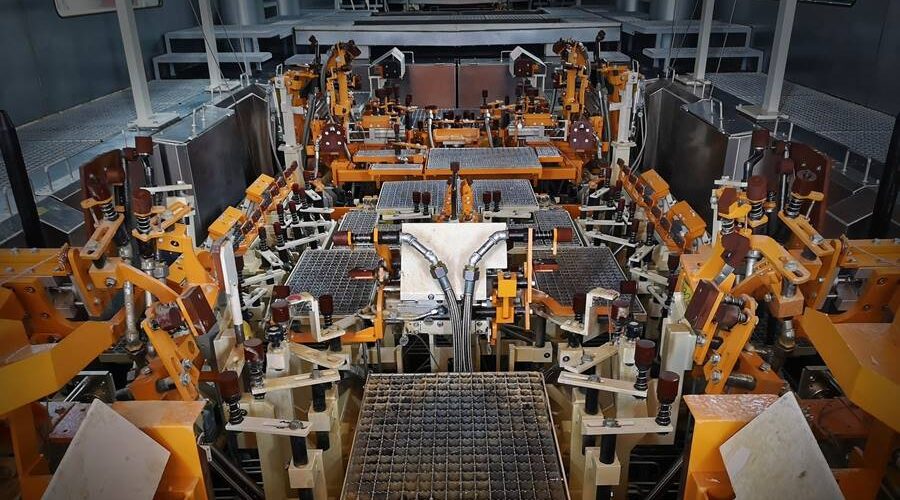
Mexico has become a serious hub for metal component manufacturing, thanks to strong industrial clusters, skilled production teams, and supply chains built for high-volume, export-ready work. For companies that source parts for automotive, aerospace, appliances, electronics, construction, and industrial equipment, two processes often decide whether a supplier can meet real-world demands on cost, durability, and lead time. Those processes are die casting Mexico services for making precise metal parts at scale, and powder coating Mexico services for protecting and finishing those parts for long-lasting performance.
Why Mexico is a strong base for metal component production
Mexico’s manufacturing ecosystem supports both complex part production and repeatable finishing work, which matters when you need consistent specs across thousands of units. Many factories are designed around just-in-time output, stable quality systems, and cross-border logistics, which helps buyers reduce shipping time and inventory pressure. When you combine this environment with die casting and powder coating under one sourcing strategy, you can often shorten the path from design to production and get a part that is both dimensionally accurate and built to survive harsh use.
Die casting in Mexico and what it solves for manufacturers
Die casting is a process where molten metal is injected into a steel mold under high pressure to form parts with tight tolerances and repeatable shapes. This matters most when your design has thin walls, detailed features, smooth surfaces, or assembly points that must align without constant rework. In Mexico, die casting is commonly used for aluminum and zinc parts, especially when production volumes are high and the cost per unit must drop without sacrificing strength or fit.
How the die casting process works in real production
A die is built from hardened steel, designed to handle heat, pressure, and fast cycle times. Metal is melted, injected into the die, cooled quickly, and then ejected, after which the part goes through trimming, deburring, and sometimes machining for critical areas. The big advantage is repeatability, because once the die and parameters are stable, the process produces the same geometry again and again with less variation than many other forming methods.
Common industries that rely on die casting Mexico suppliers
Automotive programs use die cast parts for brackets, housings, structural supports, and components where weight and strength must balance. Electronics and appliances use die cast housings and heat sinks because the shapes can be compact and consistent. Industrial machinery and construction systems often use die cast parts when they need strong features, reliable mounting points, and steady output over long runs.
Benefits of die casting for companies sourcing metal parts in Mexico
Die casting supports speed, scale, and part complexity, which is why it becomes a “go-to” option for production-focused buyers. The process can reduce the need for multiple assemblies because features like ribs, bosses, and mounting geometry can be built into a single piece. It can also reduce waste compared to some subtractive methods, especially when the design is optimized for flow, cooling, and minimal secondary operations.
Cost control through high-volume efficiency
Tooling takes upfront investment, but the cycle time per part is often fast, which makes the unit cost attractive when volumes rise. When you plan production runs correctly, you can spread tooling cost over the life of the program and gain predictable pricing. This is also where Mexico’s manufacturing base helps, because many suppliers are set up for steady throughput with controlled labor and operational costs.
Consistency and quality for assembly-ready parts
For many buyers, the real value is not only shape accuracy but also stability in fit and function. Better consistency can reduce line stoppages, reduce inspection time, and improve first-pass yield in assembly. With proper process control, die cast parts can meet tight requirements for critical dimensions, surface finish, and structural performance.
Powder coating in Mexico and why it matters after forming
Powder coating is a dry finishing method where a powdered material is applied to a metal surface, usually with an electrostatic charge, and then cured in an oven to form a hard protective layer. This is one of the most practical ways to protect metal parts from corrosion, scratches, chemicals, and UV exposure while also improving appearance. For companies sourcing components, powder coating Mexico services often become essential when parts must survive transport, outdoor use, frequent handling, or humid and coastal environments.
What powder coating protects against in everyday use
A good powder coat finish can resist chipping and abrasion better than many liquid paints, which reduces returns and warranty claims. It also adds a barrier against moisture and contaminants that cause rust and corrosion. When the part is used in industrial settings, the finish can help resist oils, cleaning agents, and general wear that quickly ruins weaker coatings.
Where powder coating is commonly used across industries
Powder coating shows up in metal enclosures, frames, brackets, furniture, racks, fixtures, and outdoor hardware because it supports both durability and clean visual results. Automotive and mobility suppliers use it for parts that need lasting protection and consistent color across batches. Appliances and consumer products rely on it because it can deliver a smooth, uniform finish that still holds up under daily use.
Benefits of powder coating for manufacturers and sourcing teams
Powder coating supports durability, appearance, and production efficiency in one step, which makes it valuable when you need a finish that stays stable over time. It can be applied in a controlled way that reduces runs and uneven thickness, and it often supports a wide range of textures and gloss levels. For sourcing teams, the big win is reliable surface protection that helps parts arrive in better condition and perform longer in the field.
Cleaner finishing with strong performance results
Because powder coating is a dry process, it can reduce issues tied to solvents and drying variability that sometimes show up in liquid paint systems. The cured finish can be tough and consistent, especially when surface prep is done correctly. When a supplier controls pretreatment, application, and curing conditions, the coating becomes a predictable layer of protection rather than a weak point.
Branding and product consistency through stable color and texture
Many companies care about finish consistency because it affects how the product looks on shelves, in showrooms, or on installed projects. Powder coating can maintain color stability and uniform coverage when the process is dialed in. That helps brands protect their visual identity while also meeting durability expectations.
Why combining die casting and powder coating improves sourcing outcomes
When you source die casting and finishing as a connected workflow, you can reduce handoffs, reduce timeline risk, and improve accountability for final part quality. Die cast parts often need trimming, machining, and surface preparation before finishing, and the best results come when these steps align with the chosen coating system. A supplier network in Mexico that can coordinate both processes helps you move from raw part to ready-to-ship product with fewer surprises.
What to look for when choosing suppliers in Mexico
A strong supplier is not just a factory with machines, but a partner that can control variation and communicate clearly about specs and risks. For die casting, pay attention to tooling capability, process control, inspection methods, and how they handle porosity risk, dimensional drift, and secondary machining needs. For powder coating, focus on surface preparation, coating thickness control, cure validation, adhesion testing, and packaging standards that prevent damage during shipping.
Quality systems and documentation that reduce risk
Many buyers prefer suppliers that operate with structured quality systems and provide consistent documentation for inspections and process checks. Clear part drawings, tolerance agreements, and approved samples are key before full production starts. When suppliers can show stable results across pilot runs, you gain confidence that scaling production will not introduce new issues.
Prototyping, sampling, and scaling without losing consistency
If your program starts with prototypes or low-volume runs, make sure the supplier can transition into higher volume without changing materials, tooling strategy, or process discipline. Tooling changes, material substitutions, or rushed cycle times can damage quality fast. A good supplier will explain what changes as volume rises and how they keep the outcome stable.
Relevance for companies manufacturing or sourcing metal components in Mexico
For nearshore sourcing and Mexico-based production, die casting and powder coating often cover a large share of real-world metal part needs, from structural brackets to finished consumer-facing components. Die casting supports complex geometry at scale with consistent output, while powder coating protects the part and improves its market-ready appearance. When you choose the right process mix and the right production partner, you can reduce landed cost, shorten lead times, and improve product durability without adding unnecessary complexity.
Final takeaway
Companies that want dependable metal component supply in Mexico often get the best results by pairing high-precision forming with durable finishing. Die casting Mexico capability helps produce repeatable parts efficiently, while powder coating Mexico services help those parts last longer and look better in real use. Together, they form a practical, proven manufacturing path for brands that care about quality, speed, and long-term performance.


